
Free Consultations703-542-4500

Leesburg Child Pornography Defense Lawyer
Dismissal achieved early by attacking the admissibility of evidence.

They were professional, supportive, and always kept me informed throughout the whole process. I felt confident having them represent me...
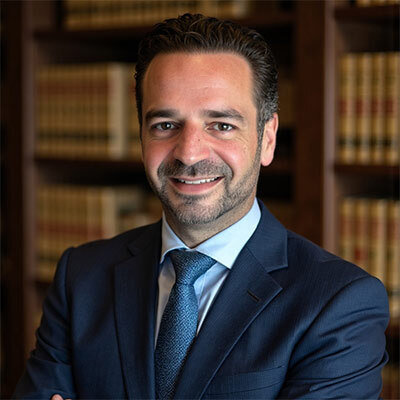
As the owner, founder, and managing attorney of Noorishad Law, P.C., Kaveh concentrates his practice in criminal and civil litigation across Virginia. Committed to helping people through difficult legal matters, he offers a free initial consultation.
125+ Star Reviews
I cannot recommend Mr. Noorishad highly enough. From the very beginning, he was professional, knowledgeable, and incredibly responsive. He took the time to clearly explain every step of the process, made sure I understood my options, and always kept me informed. If you’re looking for an attorney who is honest, reliable, and genuinely cares about his clients, Mr. Noorishad is the person you want on your side. I’m extremely grateful for his help and would absolutely recommend him to anyone in need of legal representation.
When a person has been accused of an offense involving child sexual abuse materials (CSAM), they may face multiple types of criminal charges, and severe penalties can be imposed if they are convicted. Law enforcement agencies treat child pornography offenses as some of their top priorities. A conviction can result in decades in prison, and other penalties, including lifetime registration as a person who has been convicted of a sex crime.
Being charged with a CSAM offense does not mean that a person is guilty. The digital evidence in these cases can be complicated, and law enforcement officials may make errors during investigations. There are multiple options for defense, so it is critical for people facing these charges to secure representation from an attorney who will examine the evidence carefully and take steps to protect their rights during their case.
Noorishad Law, P.C. represents people in the Leesburg area who are facing child pornography and CSAM charges. Attorney Kaveh Noorishad understands the gravity of these accusations and the impact that they can have on a person and their family. He will work to resolve these cases successfully by defending against a conviction or securing reductions in charges and penalties.
CSAM is the term used to describe sexually explicit images, videos, or other content that depicts minors. Virginia law defines a minor as any person younger than 18 years old. CSAM may include a wide range of content, including:
Under Virginia Code § 18.2-374.1:1, a person may be charged with possession of child pornography based on accusations that they have possessed physical photographs, films, or videotapes or any digital files that are considered to be CSAM. A first conviction for CSAM possession is a Class 6 felony, carrying a potential sentence of one to five years in prison. A second conviction or any additional convictions will be classified as Class 5 felonies, punishable by one to ten years in prison.
Child pornography possession charges are serious, but the penalties can increase if a person is accused of distributing CSAM to others or abusing children by creating CSAM. Any activities in which a person transmits or transfers CSAM to someone else can lead to child pornography distribution charges, including when someone sells physical materials, makes materials available online, or stores materials on systems that may be available to others, such as cloud storage. The penalties for CSAM distribution include a potential sentence of five to 20 years in prison.
Distribution charges may not involve large-scale schemes to sell or transfer materials to a large number of people. Sending a single image or video to one other person through a text message, email, or other means may lead to a CSAM distribution charge. Law enforcement officials may conduct undercover operations in which officers will pose as other users and ask someone to share files, and the actions a person takes in response could result in an arrest for child pornography distribution.
Charges of child pornography production may be based on accusations that a person has been involved in creating CSAM. This may involve participating in creating sexually explicit photographs or videos of children, financing or profiting from the production of child pornography, or soliciting children with the intent of creating CSAM. A person who is convicted of this offense in Virginia may be sentenced to between five and 30 years in prison.
The defenses that may be available in a child pornography case will depend on how the materials in question were obtained by law enforcement and other factors involved in a case. Our attorney can evaluate all facts involved in a case to identify the strategies that may be used, which may include.
Police officers must obtain a valid search warrant supported by probable cause before seizing a person's devices or any other evidence. If a warrant was based on unreliable information, was not executed correctly, our lawyer may take steps to suppress evidence gathered during searches. Evidence obtained in searches performed without a warrant may also be suppressed. Without sufficient evidence, the charges against a person may be dropped.
In some cases, files on a device may not have been intentionally downloaded by the device's owner. Files may be downloaded by malware, or someone else may have used a person's device to access illegal materials. Our attorney can work with digital forensics experts to analyze the files on a device, determine when they were downloaded or accessed, and challenge claims that a person knew about these materials.
In some cases, the age of a person depicted in materials seized by law enforcement may be uncertain. Prosecutors must prove that the person shown was below the age of 18. If there is no way to determine a person's age, and it is possible that the person could have been over the age of 18, our lawyer can question whether materials should be classified as CSAM.
When a person is arrested based on undercover law enforcement operations, entrapment may be a defense. Our attorney may be able to show that an officer induced a person to commit an offense that they would not have committed otherwise. If an officer took an active and persistent role in encouraging a person to commit illegal conduct, this may serve as a defense against criminal charges.









Yes. Deleting files from a device does not permanently remove them. Digital forensic tools used by law enforcement can recover deleted files. Officers may also access a person's internet browsing history, cached images, and fragments of files. Deleted content that is recovered or records showing that a person accessed CSAM online can serve as evidence in a criminal case.
Yes. A conviction for possession, distribution, or production of CSAM in Virginia will result in mandatory sex offender registration requirements. Depending on the specific offense, registration may be required for 15 years or for the rest of a person's life.
You could be charged with a child pornography offense based on accusations that you knew about CSAM on your property, including devices you own or that were kept in your home. If multiple people had access to a computer or network, the prosecution must prove beyond a reasonable doubt that you knowingly possessed the material. Our attorney can help you take steps to show that you were unaware of any illegal materials, and factors such as usage patterns, online account histories, and access logs may play a role in your defense.
In some cases, prosecutors may choose to dismiss charges based on a lack of evidence or a successful defense showing that a person did not knowingly possess CSAM. Our lawyer can take steps to suppress evidence that was obtained illegally, challenge the methods used to analyze digital evidence, or raise questions about whether a person knowingly possessed CSAM, working to secure a dismissal. If prosecutors are not willing to dismiss charges, other options may be available, such as the reduction of a charge from CSAM distribution to CSAM possession or a different offense. Our attorney will work to ensure that a case can be resolved successfully and achieve the best possible outcome for a defendant.
CSAM investigations often begin long before a person is arrested. Law enforcement officials may monitor a person's online activities, obtain records from internet service providers, and obtain search warrants that allow them to access online accounts or digital systems. If a person's devices have been seized, or if they believe that they may be under investigation for an offense involving child pornography, it is important to contact our lawyer immediately.
Statements made to police without having an attorney present can be damaging. A person may believe that they are providing a reasonable explanation, but no matter what they say, their words will most likely be used against them. Our attorney can provide guidance on how to respond to questions or requests by law enforcement, help a person understand what not to say, and take steps to address accusations even before charges are filed.
At Noorishad Law, P.C., our lawyer can provide an effective defense for people facing CSAM charges. He knows how much is at stake in these cases, and he will provide the compassionate defense needed to resolve these cases successfully. Contact our Leesburg CSAM defense attorney at 703-542-4500 to arrange a free consultation today.
People in Leesburg who face child pornography charges will usually have their cases heard at the Loudoun County Circuit Court, located at:
We represent clients in Fairfax from our office in McLean, located at:
Noorishad Law, P.C.
8200 Greensboro Drive, Suite 900
McLean, VA 22102
(By Appointment Only)
703-542-4500 - Office
703-636-8945 - Fax


Reach out to us by filling out the form below or calling 703-542-4500. We are available 24/7 to address your needs, and we will provide you with a free consultation.

From our office in McLean, VA, Noorishad Law, P.C. provides legal help to clients and their families throughout the area, including Fairfax County, Arlington County, Loudoun County, Prince William County, Alexandria, Annandale, Arlington, Ashburn, Broadlands, Burke, Cascades, Centreville, Dale City, Dumfries, Fairfax, Falls Church, Gainesville, Haymarket, Herndon, Lake Ridge, Leesburg, Manassas, Montclair, Occoquan, Purcellville, Quantico, Reston, Stafford, South Riding, Springfield, Sterling, Stone Ridge, Sugarland Run, Tysons Corner, Vienna, Woodbridge, and Woodburn.
Results listed are not a guarantee or indication of future case results.