
Free Consultations703-542-4500

Manassas DUI Lawyer
We challenged the breath test and officer observations, winning dismissal at a motion to strike in trial.

I am not typically anxious but an unexpected DUI case put me anxiety through the roof. Thank you for everything you did for me, from beginning to end I was lucky to have you as my Lawyer...
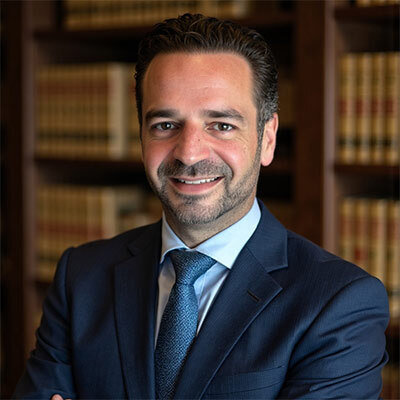
As the owner, founder, and managing attorney of Noorishad Law, P.C., Kaveh concentrates his practice in criminal and civil litigation across Virginia. Committed to helping people through difficult legal matters, he offers a free initial consultation.
125+ Star Reviews
I had a great experience. I was worried but he was able to work out a great deal, and made the whole process very easy for me. Im more than happy with the outcome. I would recommend him to anyone. So grateful, thank you!
Being arrested and taken to jail can be jarring, whether or not you have ever been in legal trouble before. It is normal to be fearful about how a DUI charge will impact your life. You might be worried about how you will get to work if your driver's license is suspended or whether your boss will fire you if you miss work due to being incarcerated. You may also worry about how a DUI arrest might affect your professional license or career trajectory.
The expenses associated with a DUI can also be significant. Even if your family is normally financially comfortable, dealing with expenses like fines, court costs, increased insurance rates, installing and maintaining an ignition interlock device, or finding alternate transportation may have a noticeable impact on your lifestyle.
By fighting back with the help of a determined Manassas DUI lawyer, you can take steps to avoid these harsh legal and collateral consequences. Many DUI defendants have powerful defenses they are unaware of until an attorney carefully reviews their case. Attorney Kaveh Noorishad has been recognized by the American Institute of DUI/DWI Attorneys as one of Virginia's top 10 DUI lawyers for client satisfaction. He fights to deliver outstanding results for every client.
Some people who are arrested for intoxicated driving may be struggling with a substance abuse problem. It is common for people who use alcohol every day to not feel intoxicated when their BAC is at or slightly above the legal limit of 0.08 percent. People who are addicted to prescription or street drugs often have a "base level" of intoxication that is normal for them. An arrest under these circumstances can be jarring, but it may also provide a valuable wake-up call.
Substance abuse treatment or an alcohol education program is a normal part of DUI sentencing. Defendants who acknowledge that they are battling addiction and are proactive about getting help will often be more likely to receive favorable treatment in court.
However, being addicted to drugs or alcohol does not necessarily mean that you are guilty of driving drunk or that you do not have a defense against DUI charges. You may have been pulled over illegally, or the police may have mishandled your BAC test. Attorney Noorishad will review the facts of your case with the same diligence and determination he would use in any other case to identify the best possible defense strategy for you.
If this is your first DUI charge, you could still be facing up to a year in jail and a year-long driver's license suspension. You could also be fined up to $2,500. Most defendants are also required to complete an alcohol education program that may be time-consuming.
It is often possible to avoid jail time entirely after a first-time DUI arrest if your case is well-handled. Attorney Noorishad will advise you on the defense strategies that may be available, and he will work to prevent a DUI conviction while minimizing the ways your life may be affected by your arrest.
A repeat DUI charge can be serious. Mandatory minimum jail sentences begin to apply after a second DUI arrest within 10 years. For a second DUI conviction within that 10-year limit, you would be required to serve a minimum of 10 days. If this is your second DUI conviction within five years, you would serve a minimum of 20 days if convicted.
The penalties increase substantially after a third DUI conviction. A third DUI charge is a felony in Virginia, and a conviction may lead to a sentence of as many as five years in prison, with a mandatory minimum of six months if the two prior DUI cases took place within the last five years. The minimum sentence is 90 days if the two previous DUI convictions took place within the last 10 years. Your license will be suspended indefinitely, and you cannot get a hardship license for at least three years. Because of these penalties, you will need to make sure you have an attorney advocating for you and working to prevent a subsequent DUI conviction. Our lawyer can make sure you take the right steps during your defense.










In Virginia, DUI (driving under the influence) and DWI (driving while intoxicated) are terms that may be used interchangeably. Most intoxicated driving offenses are referred to as DUI. Charges may be based on accusations of driving under the influence of alcohol, driving under the influence of drugs, or driving under the influence of a combination of substances that led to intoxication.
Virginia's implied consent law requires drivers to consent to a breath or blood test if they are arrested for DUI. Refusing to submit to a chemical test after a DUI arrest will result in a one-year driver's license suspension. A second or subsequent refusal within 10 years may lead to Class 1 misdemeanor charges. However, the implied consent law only applies after an arrest. You are not legally required to take a preliminary breath test during a traffic stop. However, your refusal to take a roadside breath test may be used as a factor in a police officer's decision to arrest you for DUI.
Your license can be affected in two separate ways after a DUI arrest in Virginia. First, if a breath or blood test conducted after your arrest showed that your BAC was 0.08 percent or higher, or if you refused a chemical test, an administrative license suspension will go into effect. Second, a DUI conviction in court can result in a separate license revocation. For a first offense, the revocation period is one year.
An ignition interlock device (IID) is a breath-testing device that is installed in a vehicle. If you are required to use an IID, you will need to provide a breath sample before the car will start. An IID will usually be required if you receive a restricted driver's license during a period of license suspension or revocation. An IID may also be required for a period of time after your driver's license is restored.
When a commercial driver is convicted of DUI, even if they were arrested while driving a personal vehicle, they may be disqualified from operating a commercial vehicle for one year. A second DUI conviction will result in a lifetime disqualification. If you are a commercial driver, a DUI charge can put your career at risk, which is why it is important to work with an attorney to defend against a conviction.
There are multiple types of defenses that may be available in DUI cases, and our criminal defense lawyer will carefully review the circumstances of your arrest, the procedures followed by police officers, and the evidence involved in your case to build a defense on your behalf. Some methods of defending against DUI charges may include:
A police officer must have had a reason to pull you over beyond a vague suspicion or an unfounded belief that you were intoxicated. A traffic stop is considered to be a seizure under the Fourth Amendment, and seizures must be supported by reasonable suspicions that the law has been violated. When there was no valid legal basis for a traffic stop, our attorney can take steps to suppress the evidence that was gathered during or after the stop.
DUI arrests may be based on a person's performance in field sobriety tests that police officers conduct during a traffic stop. An officer may ask a driver to walk in a straight line or maintain balance while standing on one foot. A loss of balance or difficulty following instructions may be interpreted as signs of impairment. However, physical conditions such as inner ear problems or leg injuries, as well as factors like harsh weather or uneven road surfaces, could affect a person's performance on these tests. Our lawyer can highlight issues with field sobriety tests and argue that they did not prove that you were intoxicated.
Breath and blood test results may serve as evidence in DUI cases, but they are not always accurate. Breathalyzer devices may give inaccurate readings if they were not properly calibrated. An officer who was not properly trained, qualified, and certified may perform a breathalyzer test incorrectly. Certain medical conditions, including acid reflux or diabetes, could lead to elevated BAC readings that do not indicate intoxication. Blood test results may also be challenged based on improper collection procedures, improper transportation or storage of blood samples, or errors by lab technicians.
Alcohol will continue to be absorbed into the bloodstream for a period of time after drinking stops. It is possible that your BAC was below the legal limit at the time you were driving, but it may have risen above 0.08 percent by the time a BAC test was administered. This defense, known as the rising blood alcohol defense, may be available when there was a significant delay between the time when you were pulled over and the time you took a BAC test.
If you have been charged with DUI based on the use of drugs, you may have been evaluated by a drug recognition expert (DRE), or a blood test may have found drugs in your system. Both of these forms of evidence can be challenged. Our lawyer can determine whether an evaluation by a DRE may have been inaccurate, or he can take steps to challenge blood test results based on issues such as improper collection, storage, and analysis of blood samples.
Noorishad Law, P.C. will work to make the impossible possible for you. Our dedicated Manassas, VA DUI defense attorney will work closely with you to help you avoid a DUI conviction. Contact our office at 703-542-4500 for a free consultation.
People in Manassas who face criminal charges will usually have their cases heard at the Prince William County General District Court, located at:
We represent clients in Manassas from our office in McLean, located at:

Noorishad Law, P.C.
8200 Greensboro Drive, Suite 900
McLean, VA 22102
(By Appointment Only)
703-542-4500 - Office
703-636-8945 - Fax


Reach out to us by filling out the form below or calling 703-542-4500. We are available 24/7 to address your needs, and we will provide you with a free consultation.

From our office in McLean, VA, Noorishad Law, P.C. provides legal help to clients and their families throughout the area, including Fairfax County, Arlington County, Loudoun County, Prince William County, Alexandria, Annandale, Arlington, Ashburn, Broadlands, Burke, Cascades, Centreville, Dale City, Dumfries, Fairfax, Falls Church, Gainesville, Haymarket, Herndon, Lake Ridge, Leesburg, Manassas, Montclair, Occoquan, Purcellville, Quantico, Reston, Stafford, South Riding, Springfield, Sterling, Stone Ridge, Sugarland Run, Tysons Corner, Vienna, Woodbridge, and Woodburn.
Results listed are not a guarantee or indication of future case results.