
Free Consultations703-542-4500

Ashburn DUI Lawyer
We challenged the breath test and officer observations, winning dismissal at a motion to strike in trial.

I am not typically anxious but an unexpected DUI case put me anxiety through the roof. Thank you for everything you did for me, from beginning to end I was lucky to have you as my Lawyer...
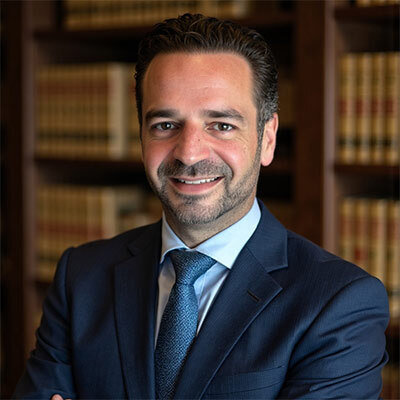
As the owner, founder, and managing attorney of Noorishad Law, P.C., Kaveh concentrates his practice in criminal and civil litigation across Virginia. Committed to helping people through difficult legal matters, he offers a free initial consultation.
125+ Star Reviews
I had an excellent experience with Noorishad Law PC. Mr. Noorishad was professional, knowledgeable, and completely on point when handling my case. He explained everything clearly, gave me the confidence I needed throughout the process, and delivered results beyond my expectations. There’s no doubt in my mind that he is one of the best lawyers out there. I highly recommend Mr. Noorishad and his firm to anyone who needs strong and reliable legal representation.
Getting arrested for DUI does not automatically mean that you are going to be found guilty in court. Even if you were allegedly driving with a BAC of 0.08 percent, you might still have a valid legal defense against DUI charges. There are a lot of rules the police have to follow in order for the evidence they gathered against you to be admissible in court. Anything from a constitutional issue with the original traffic stop to a mistake in administering chemical BAC tests can significantly weaken or destroy the state's case against you.
As you address DUI charges, you will need a well-qualified lawyer to review the facts of your case. Even if the evidence against you truly is insurmountable, there is still a lot an experienced attorney can do to protect you.
Noorishad Law, P.C. focuses on achieving the best possible results in every case. We take on a limited number of cases so that Attorney Kaveh Noorishad can give his full attention to each client. Our firm can handle even the most challenging of DUI cases. Attorney Noorishad is well-versed in mitigating the impact of cases and helping clients protect their driving privileges. He never gives up, and he will keep fighting for you from the moment you contact him after your arrest until your case is completely resolved.
There are several situations where a person could be arrested and charged with DUI in Virginia, including:
Many DUI charges are based on accusations that a person was operating a motor vehicle with a BAC above the legal limit of 0.08 percent. Higher BAC levels may increase the potential penalties that may apply in DUI cases. A BAC of 0.15 percent or higher triggers a mandatory minimum jail sentence of five days. A BAC of 0.20 percent or higher may result in a minimum 10-day sentence.
The DUI laws also apply to people who are accused of driving under the influence of drugs, including prescription medications, over-the-counter drugs, and illegal substances. Any narcotic drug or other types of drugs that may impair a person's ability to drive safely could lead to DUI charges.
Some DUI cases may involve accusations that a combination of alcohol and drugs led to impairments that affected a driver's ability to operate a vehicle safely. In these cases, even if alcohol or drugs alone would have been enough to cause impairment, a prosecutor may argue that the combination of substances resulted in intoxication.
It is unlawful for a person who is younger than the legal drinking age to operate a motor vehicle after consuming alcohol. For minors, a BAC of 0.02 percent or higher can lead to charges of underage DUI. Based on a small amount of alcohol, an underage driver could face a license suspension, fines, and/or community service.
Understanding what law enforcement officers may do when they suspect that a driver is intoxicated and what rights apply during traffic stops and arrests can help ensure that a person will be able to defend against DUI charges.
An officer cannot pull over a driver unless they have a legal reason for doing so. A traffic stop is considered to be a seizure under the Fourth Amendment, and unreasonable seizures are not permitted. For a traffic stop to be lawful, it must be based on a reasonable suspicion that a person has violated the law. Officers may perform DUI traffic stops when they observe behavior that indicates that a person may be intoxicated, such as weaving between lanes, driving too slowly, running a red light, or making an illegal turn.
After pulling a driver over, an officer may ask them to perform one or more physical tests to determine whether they may be impaired. The horizontal gaze nystagmus test may be used to observe eye movements when a person is looking at a moving object. The walk-and-turn or one-leg stand tests may be used to gauge balance or other physical issues related to intoxication. The ways a person acts during these tests and their ability to follow instructions may serve as the basis for a DUI arrest.
An officer may ask a driver to submit to a preliminary breath test (PBT) at the roadside. The results of a PBT are generally not admissible as evidence during a trial, but these tests may be used to get an estimate of a person's BAC and determine whether they may be arrested for DUI.
After an officer places a driver under arrest, they will usually request a chemical test of the person's blood or breath. Unlike a roadside PBT, post-arrest chemical tests are mandatory, and the results are admissible as evidence at trial. Refusing to submit to a chemical test will lead to a one-year license suspension, and a second refusal may lead to Class 1 misdemeanor charges.
One of the most powerful DUI defense strategies involves having the state's most important evidence excluded from court. Excluded evidence cannot be used to help convict you. A few reasons evidence might be excluded include:









A first-time DUI is classified as a Class 1 misdemeanor. Penalties include a fine of at least $250 and a 12-month license revocation. A first-time DUI may not result in jail time unless an offense involved a high BAC. However, other issues may affect a person, such as discipline to a professional license, difficulty obtaining certain types of jobs, increased insurance rates, and the requirement to take DUI education courses.
A second DUI conviction will lead to harsher penalties than a first-time DUI. In these cases, the minimum fine will increase to $500, and a person's license will be revoked for three years. A person may also face a potential jail sentence that could last for up to one year. If the second DUI offense took place within 10 years of the first offense, a person will be required to serve a mandatory minimum jail sentence of 10 days. A second DUI within five years will result in a mandatory minimum sentence of 20 days.
A DUI conviction will result in a one-year driver's license revocation for a first offense, and the revocation period will be longer for subsequent offenses. Even if an arrest does not result in a conviction, an administrative license suspension will go into effect if a chemical test of your breath or blood showed that you were over the legal limit or if you refused to take a test. You may be able to challenge this suspension, and our attorney can advise you on the steps you can take to protect your driving privileges after an arrest.
No. You have the right to remain silent. You can decline to answer questions asked by police officers, including where you have been, whether you have been drinking, or whether you have used any other substances. Statements made to police can be used against you during your case, and even if you provide reasonable explanations or descriptions of your activities, what you say could end up hurting your case. Contact our law firm as soon as possible to get legal help and determine your best options for defense.
Some other options for defending against DUI charges may include:
Noorishad Law, P.C. is results-driven and client-focused. Aggressive Ashburn, VA DUI defense lawyer Kaveh Noorishad has been named one of the Top 100 National Trial Lawyers, and he has been recognized by Super Lawyers multiple times. Contact our Ashburn intoxicated driving defense lawyer at 703-542-4500 for a complimentary consultation.
People in Ashburn who face DUI charges will usually have their cases heard at the Loudoun County Circuit Court, located at:
We represent clients in Ashburn from our office in McLean, located at: 8200 Greensboro Drive, Suite 900, McLean, VA 22102

Noorishad Law, P.C.
8200 Greensboro Drive, Suite 900
McLean, VA 22102
(By Appointment Only)
703-542-4500 - Office
703-636-8945 - Fax


Reach out to us by filling out the form below or calling 703-542-4500. We are available 24/7 to address your needs, and we will provide you with a free consultation.

From our office in McLean, VA, Noorishad Law, P.C. provides legal help to clients and their families throughout the area, including Fairfax County, Arlington County, Loudoun County, Prince William County, Alexandria, Annandale, Arlington, Ashburn, Broadlands, Burke, Cascades, Centreville, Dale City, Dumfries, Fairfax, Falls Church, Gainesville, Haymarket, Herndon, Lake Ridge, Leesburg, Manassas, Montclair, Occoquan, Purcellville, Quantico, Reston, Stafford, South Riding, Springfield, Sterling, Stone Ridge, Sugarland Run, Tysons Corner, Vienna, Woodbridge, and Woodburn.
Results listed are not a guarantee or indication of future case results.