
Free Consultations703-542-4500

Blog
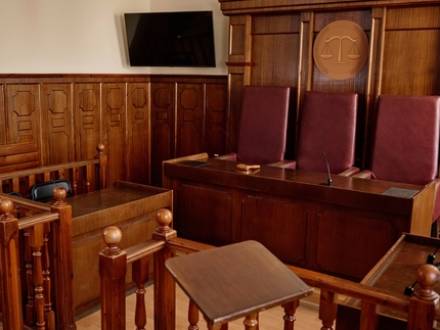 If you’re accused of battery in Virginia, the alleged victim cannot drop the charge. Once a warrant is issued, the case belongs to the Commonwealth, not to the person who called police or the person who claims to have been assaulted. The prosecutor decides whether to seek a nolle prosequi (which means "not to wish to prosecute"), and the judge decides whether to grant it. That said, what the alleged victim wants still carries real weight.
If you need to build a defense against a battery charge in 2026, our Prince William County, VA criminal defense lawyer can help. You have legal options available to you.
The Commonwealth can subpoena someone who refuses to testify in a criminal case. A witness who ignores a valid subpoena can face contempt, and courts in Virginia do enforce this.
Even when the witness shows up and says they no longer want to proceed, the case can continue. Prosecutors often have other evidence: the 911 recording, photographs taken at the scene, visible injuries documented by an officer, or statements made in the moment. However, you have a constitutional right to confront the witnesses against you, so prosecutors cannot simply read an absent witness's statement into the record.
Under Va. Code § 19.2-151, there’s something called "accord and satisfaction." It means the injured person agrees that the harm has been resolved, usually through some form of compensation or other agreed resolution. If the injured person appears in court and acknowledges in writing that they have received satisfaction for the injury, the judge may dismiss the prosecution. However, the dismissal is still discretionary, which means the judge decides, even if both sides agree.
Most battery charges fall under Va. Code § 18.2-57 as a Class 1 misdemeanor, which qualifies for accord and satisfaction. But the statute has exceptions. Accord and satisfaction is not available when the offense involved:
A law enforcement officer, as the victim or the accused
A riot
A family or household member
An intent to commit a felony
Domestic battery cases are excluded from accord and satisfaction, even when the alleged victim no longer wants the prosecution to continue. For some eligible first-time domestic assault defendants, Virginia offers a separate deferred disposition under Va. Code § 18.2-57.3. If the defendant completes the court-ordered conditions, the court dismisses the case without an adjudication of guilt.
A Virginia court may impose a no-contact condition as part of bond. Some cases also involve an emergency or preliminary protective order. Violating a bond condition can put your release at risk, while violating a protective order can result in a separate criminal charge. The contact does not have to be angry. A polite text asking someone to call the prosecutor can still create problems if contact is prohibited.
Worse, if the message looks like an attempt to influence testimony, you may face obstruction or witness intimidation allegations. Any communication about the case should go through your attorney.
In a battery case, the Commonwealth must prove that there was willful or unlawful touching. That means you can challenge the charge when the evidence does not show the required intent or when the contact was legally justified.
Possible defenses include:
You acted in self-defense against an immediate threat.
You used reasonable force to protect another person.
The other person consented to the physical contact.
The contact happened by accident and was not intentional.
The evidence does not reliably identify you as the person involved.
Attorney Kaveh Noorishad has more than 16 years of experience handling Virginia criminal cases. He can review witness statements, physical evidence, and the circumstances of the alleged battery to identify defenses that apply to your case.
At Noorishad Law, P.C., we are client-focused and results-driven, an approach clients have described as making the impossible possible. We take on a limited number of cases, including high-profile matters, so each one gets real attention rather than a place in a stack.
If you are facing a battery charge, contact our experienced Prince William County, VA criminal defense lawyer at 703-542-4500. We are available 24/7.

Noorishad Law, P.C.
8200 Greensboro Drive, Suite 900
McLean, VA 22102
(By Appointment Only)
703-542-4500 - Office
703-636-8945 - Fax


Reach out to us by filling out the form below or calling 703-542-4500. We are available 24/7 to address your needs, and we will provide you with a free consultation.

From our office in McLean, VA, Noorishad Law, P.C. provides legal help to clients and their families throughout the area, including Fairfax County, Arlington County, Loudoun County, Prince William County, Alexandria, Annandale, Arlington, Ashburn, Broadlands, Burke, Cascades, Centreville, Dale City, Dumfries, Fairfax, Falls Church, Gainesville, Haymarket, Herndon, Lake Ridge, Leesburg, Manassas, Montclair, Occoquan, Purcellville, Quantico, Reston, Stafford, South Riding, Springfield, Sterling, Stone Ridge, Sugarland Run, Tysons Corner, Vienna, Woodbridge, and Woodburn.
Results listed are not a guarantee or indication of future case results.